
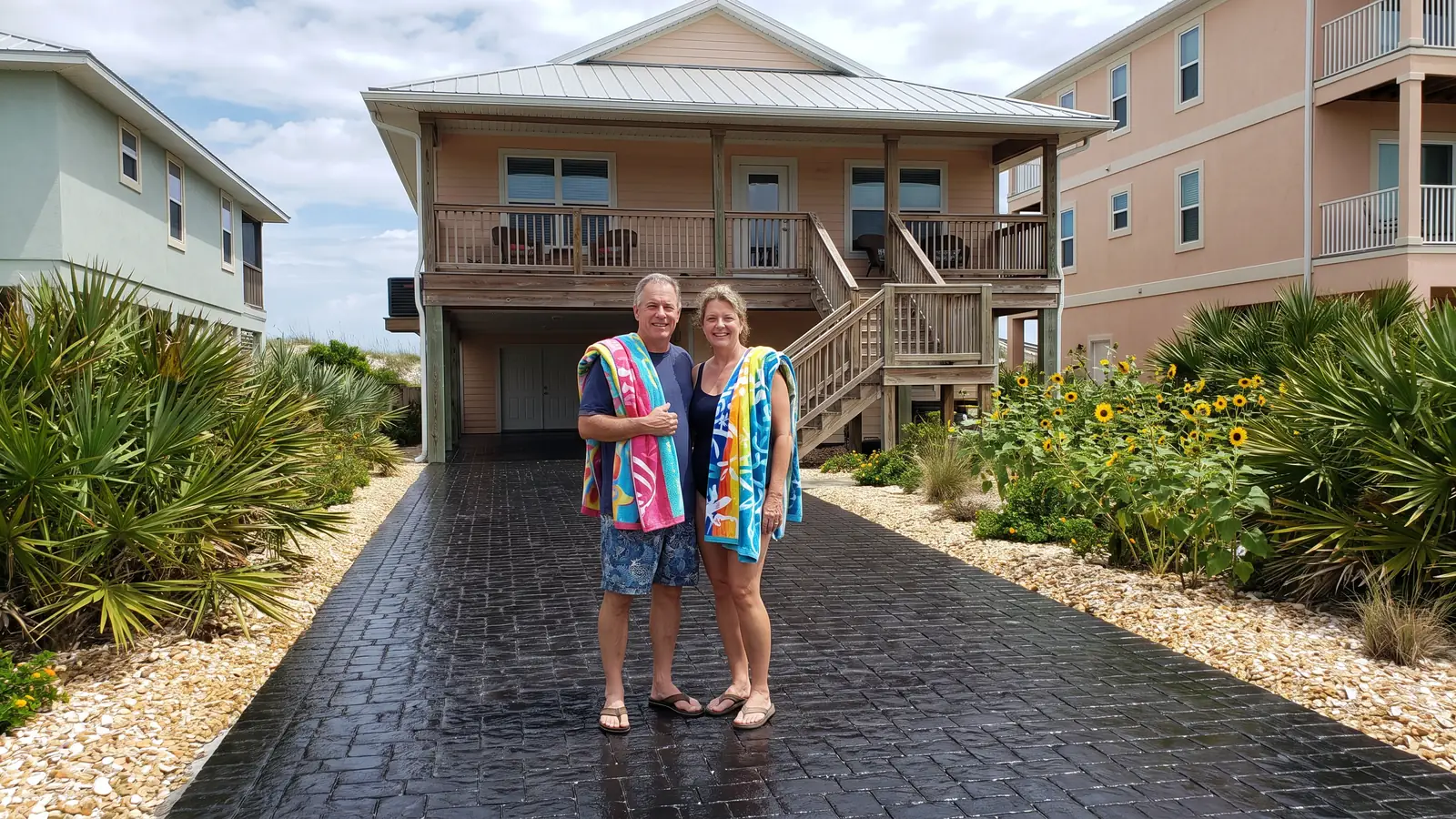
Paver sealing for Jacksonville Beach homes
Paver Sealing in Jacksonville Beach, FL
Salt air, sea breeze and hurricane-season storms test Jacksonville Beach pavers, so call (904) 719-7441 for a free sealing estimate.
- Brings out deeper paver color
- Fresh joint sand helps lock pavers in place
- Gives weeds less room to grow
- Makes the surface easier to keep clean
- Free estimate, no obligation
Request a Free Estimate
Free, no obligation.
Fast, careful paver sealing in Jacksonville Beach
Paver sealing is available across Jacksonville Beach, from the mid-century streets near San Pablo Terrace to the condo courtyards closer to the ocean. A local contractor handles the wash, the sand and the sealer for driveways, pool decks and entry walks, and the estimate is free. When you send the short estimate form, plan on a reply within 1 business day, and usually well before that.
Say your driveway has gone chalky and tan after a few summers of sun, with sand drifting out of the joints. A wash, fresh sand and a new coat can bring back the color you chose when the pavers went in. The contractor can usually tell from a short description what the visit should cover. Call (904) 719-7441 and describe your driveway, pool deck or entry walk.
Why hire a local paver sealing contractor in Jacksonville Beach?
Beach homeowners often look for a local contractor because salt air, sandy lots and fast-moving storms all affect how a sealing job goes. To hear how that applies to your block, send the short estimate form.
A free walk-through
A visit to measure your Jacksonville Beach driveway and deck is free, and the price comes in writing. Deciding is up to you.
A figure to hold bids against
Bring this to any estimate: $1.75 to $3.25 per square foot is the published price for the clean, sand and seal.
Finish choices near the pool
One local company calls matte the safest finish near pools. A wet look shines more but shows scuffs sooner, so pick for your deck.
You keep the final say
The date, the finish and the go-ahead are yours. A Jacksonville Beach estimate carries no obligation at all, and you can ask for it in writing.
Get Your Free Estimate in Jacksonville Beach
Tell us about your pavers in Jacksonville Beach.
Free, no obligation
What paver problems show up most in Jacksonville Beach?
Salt in the air and on the surface
A paver maker explains that salt travels as tiny airborne particles and crystallizes on surfaces as moisture dries. Over time that may wear lower-density materials. The University of Florida adds that coastal sites deal with wind, salt and sandy soil. Rinsing and a sealed surface help keep buildup in check, which means a coat matters more here than it would inland. Ask the contractor how the pavers will be rinsed after the job, since a rinse every so often is cheap upkeep, and ask what product goes on.
Pale pavers that show everything
The same maker says pale pavers show splash marks, salt residue and sand sooner than darker ones. If your pavers are a light color, a drive lane can look dirty within weeks of a cleaning. Cleaning plus sealer keeps that residue sitting on top of the pavers instead of soaking in, and a rinse then takes it off. Sealing before stains set in is easier than treating them later.
Rain that comes all at once
Jacksonville Beach averages 52.44 inches of rain a year, with August at 7.54 inches and September at 7.19, based on 1991 to 2020 NOAA normals. On December 6, 2016 a record 1.76 inches fell at the airport, and driveways near 12th Avenue South flooded. Heavy downpours push sand out of joints and leave silt behind, so both get dealt with before sealing. If water pools on your driveway after a storm, point that spot out, because it tells the contractor where the base may have settled.
Storm surge from the ocean side
Matthew's 2016 storm water crossed the dunes and reached at least 2nd Street. Hurricane Irma flooded a Jacksonville Beach home the next year, less than eleven months later. Pavers that sat under salt water or mud need a careful wash and a long dry before any coat goes on, because sealer would trap what is left. The city's listed elevation is 0 feet, and water covers about two thirds of its total area, so low spots can stay wet longer than you expect, and a driveway with a dip may hold water after every shower.
Sealer that turned white
One Jacksonville company traces nearly every white-sealer complaint to damp pavers or a coat laid on too thick. On an island where the air stays humid, drying time is real. If a past coat is cloudy, hazy or flaking, it may need to be stripped before anything new goes on. Stripping adds cost, so a quick look at the old coat helps the contractor give you a straight price.
Do paver jobs differ between San Pablo Terrace and the beachfront streets?
They often do, because the homes were built in different eras. Off Penman Road, San Pablo Terrace holds single-family homes from 1955 to 2005, and the median build year is 1963. Nearby Pengate Forest is much newer. Tell the contractor which street you live on when you send the short estimate form.
South Pablo Beach has a walkable grid close to the ocean, and next to it Sea Grove has 174 homes built in the 1920s. Ocean Terrace dates to the early 1980s, sits near South Beach Park and has a confirmed homeowners association. Older lots near the water can be tight, so small patios may run into a contractor's minimum job size. Call (904) 719-7441 to ask how that works.
The city's FAQ says many homeowners use the city right-of-way next to their homes, that most such use needs a revocable encroachment permit, and that city standards for paver driveways were updated in October 2023. Sealing is not a change, but a driveway apron in the right-of-way is worth a question to the city. Once you know, send the short estimate form.
What does paver sealing cost in Jacksonville Beach?
Going by the range regional companies publish, a sealing job runs $1.75 to $3.25 per square foot with the wash and sand included. Lots in the beach neighborhoods can be small, and small jobs cost more per square foot because prep does not shrink with the size of the patio. Failed sealer that has to be stripped adds to the total. For a measured price on your pavers, send the short estimate form.
Pool decks and courtyards add masking and rinsing time, since water must stay out of the pool and away from landscaping. Stairs, locked gates and tight side yards add prep too. A plain driveway with sound pavers sits near the low end. Call (904) 719-7441 with a quick description, and the contractor can place your layout within the range.
| Paved area | Typical example | Clean, sand and seal |
|---|---|---|
| 300 sq ft | Small patio or walkway | $525 to $975 |
| 600 sq ft | Two car driveway | $1,050 to $1,950 |
| 1,000 sq ft | Large driveway or pool deck | $1,750 to $3,250 |
| 1,500 sq ft | Driveway plus pool deck | $2,625 to $4,875 |
Math based on the $1.75 to $3.25 per square foot that Northeast Florida paver companies published as of November 2026. Your contractor sets the actual price after seeing the surface. Repairs, leveling and stripping failed sealer are usually extra.
How does a paver sealing job work in Jacksonville Beach?
Inspect for salt residue, dips and old sealer
The contractor walks the whole surface, driveway to pool deck, and looks for salt crust, pale splash marks and sunken pavers. Repairs come first, because sealer only preserves whatever shape the surface is in. The contractor also notes any spot where water sits, so you and the contractor agree on the starting point. If an earlier coat is on the pavers, its type matters, since water-based sealer cannot go over solvent-based sealer.
Wash and rinse thoroughly
The wash removes salt, sand, algae and any silt left by storm water. A paver maker says routine rinsing helps with salt buildup on the coast. Rinse water is kept out of the pool and away from plants, and walls, screens and doors are protected from the spray. Stubborn marks may take a second treatment.
Refill the joints with fresh sand
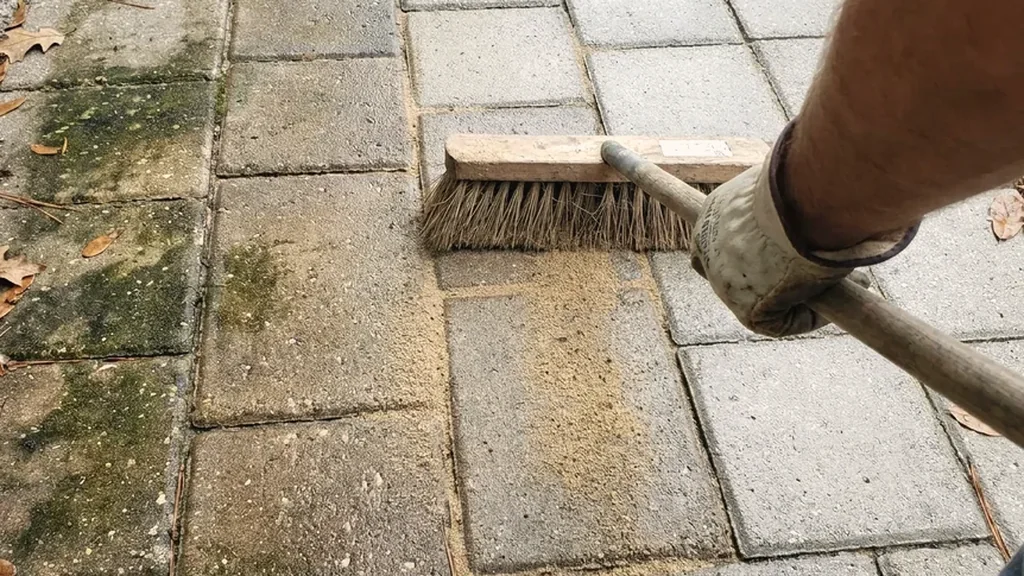
Washing pulls sand out of the joints, so it is replaced before sealing, never after. On a sandy barrier island that is easy to overlook, and open joints invite weeds and let water reach the base. Full joints also help the pavers hold their lines, and the sand is swept in until each joint is topped off.
Let everything dry
Sealer needs a dry surface, and the island rarely stays dry for long. Jacksonville Beach gets a nearly daily sea breeze in the wet season, and showers move in from the ocean side. The contractor watches the forecast and waits, even if the date has to move, because a coat laid on damp pavers is the usual reason sealer turns white. A shaded courtyard may need more drying time than a driveway in full sun.
Apply the coat and plan the stay-off time
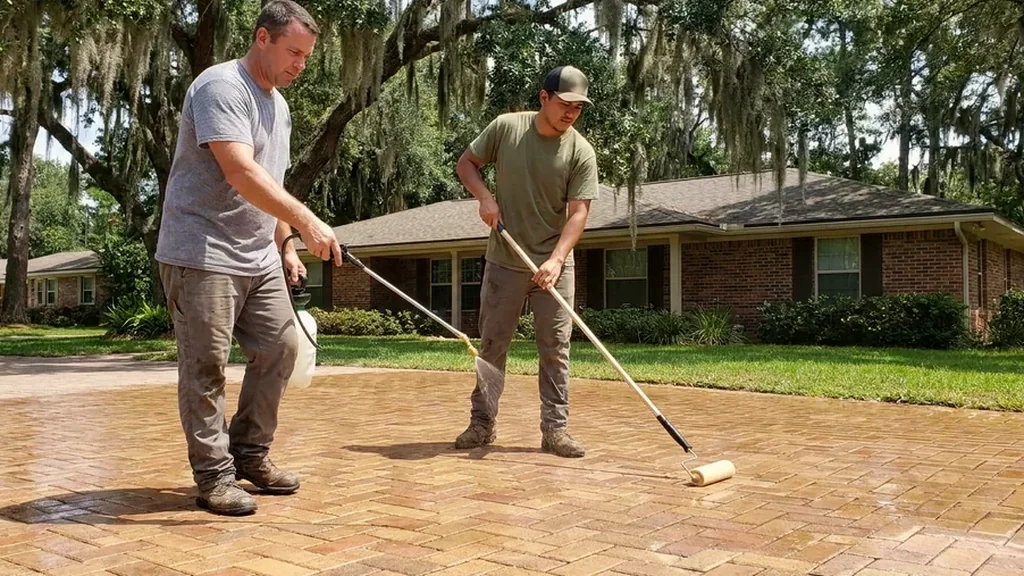
Many contractors spray the sealer and then back-roll it so it reaches into the joints and finishes evenly. For pool decks, matte or a penetrating sealer with traction is the usual pick, because a Jacksonville cost guide says film-forming sealers can trap moisture and create slip hazards. One company says walking on the coat is usually fine within hours and cars should wait about a day, depending on the product and the weather. Your contractor will give you the exact times for the product on your pavers.
Complete paver services in Jacksonville Beach
At Jacksonville Beach the work runs wash, fresh sand, dry time, then sealer. The wash takes off salt, sand and algae, and the sealer goes on last. Doing it in that order keeps residue from being sealed under the coat, which is what makes a finish look cloudy later. Call (904) 719-7441 to ask how long each step would take on your property.
Driveways take tire wear and drip stains, while pool decks need traction and walkways collect sand from the dunes and the wind. One Jacksonville company says drive surfaces wear faster than patios, which is why drive lanes lose color first. A pool deck sealer needs an anti-slip additive in any finish, because gloss is slippery when wet. Name every surface when you send the short estimate form, so the quote covers each one.
Sealer is either a film-forming product that sits on top and binds joint sand, or a penetrating product that soaks in and leaves the look alone. A local company puts film-forming coats at 3 to 5 years and penetrating ones at 5 to 7. Water-based sealer cannot go over solvent-based. Call (904) 719-7441 to weigh the two for your pavers.
Hurricane season runs June 1 to November 30, and the wet season brings storms most afternoons. A Jacksonville company says sealing in fall, after hurricane season, protects pavers through the dry winter. November is the driest month here at about 2.5 inches of rain. To pick a date that works on your street, send the short estimate form.
Questions to ask before you hire
- How do I choose between a natural finish and a wet look?
- How many square feet did you measure, and how does that set my price?
- Will you test the sealer on a hidden spot and show me the result?
- Can you work around my pool, screen enclosure and landscaping without damage?
- How many dry days do you need before and after the sealer goes on?
- Does the written estimate list the sealer brand, the coats and the total price?
- How long before I can walk, drive and set furniture on the finished surface?
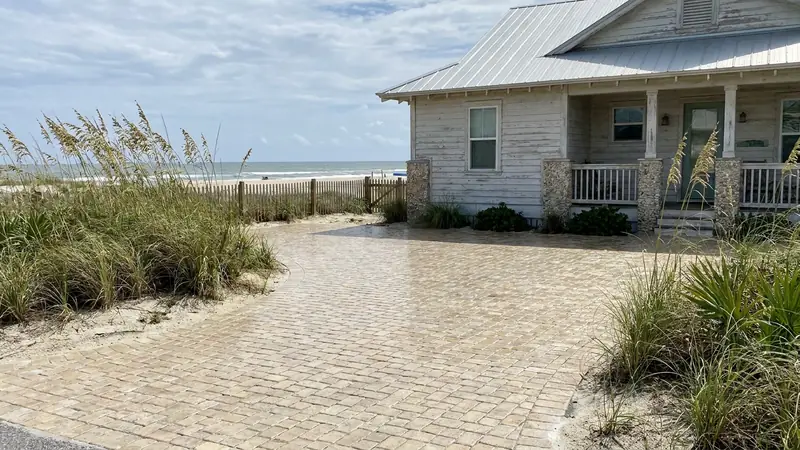
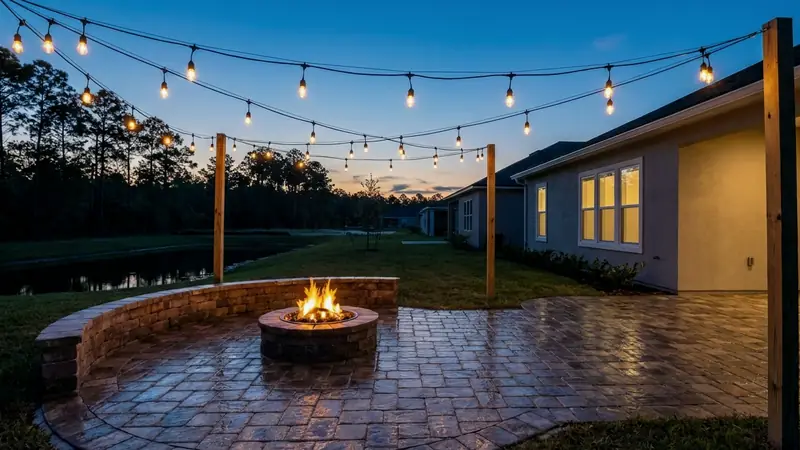
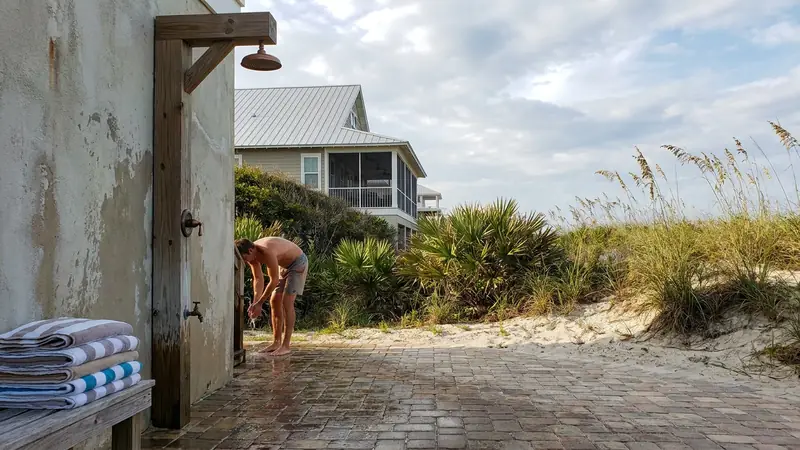
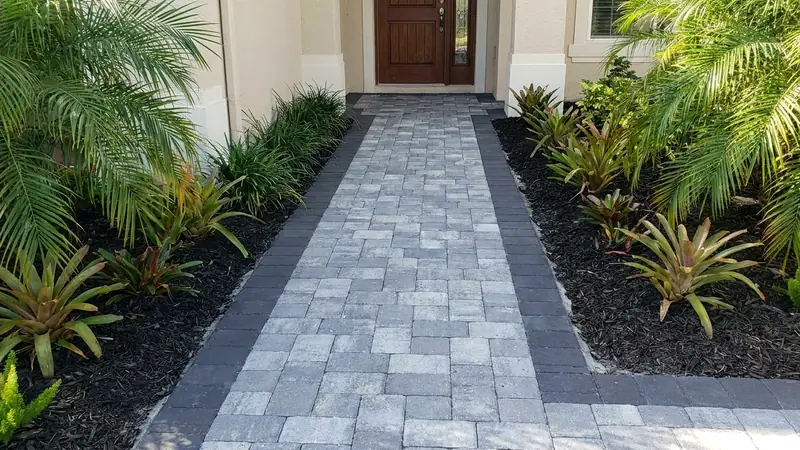
What do sealed pavers look like around Jacksonville Beach?
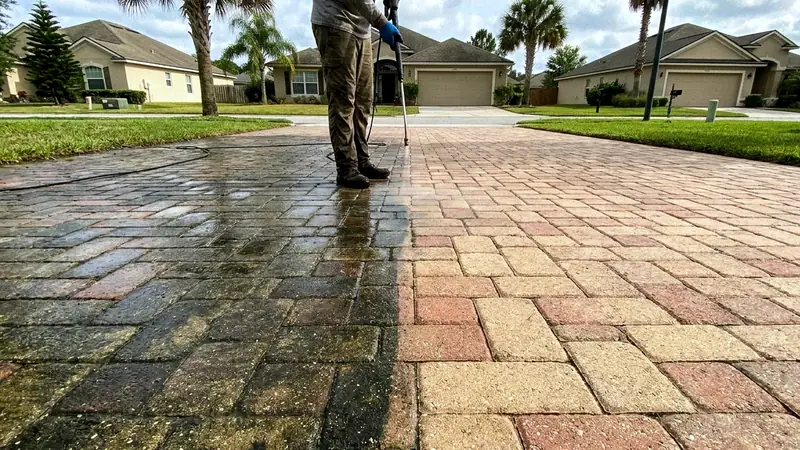
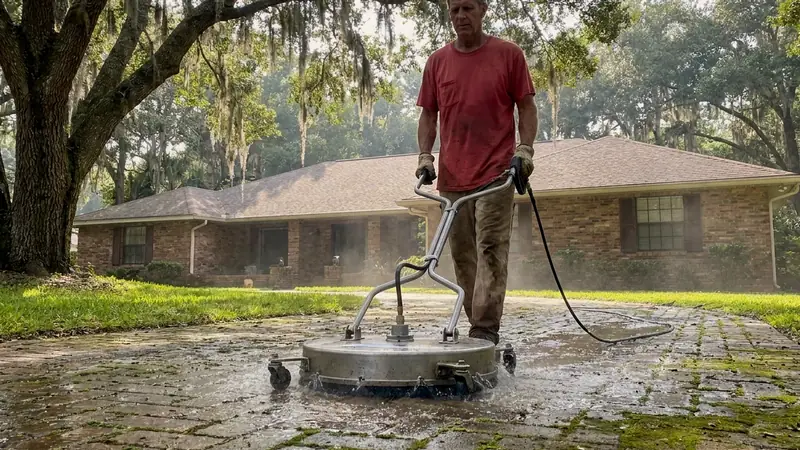
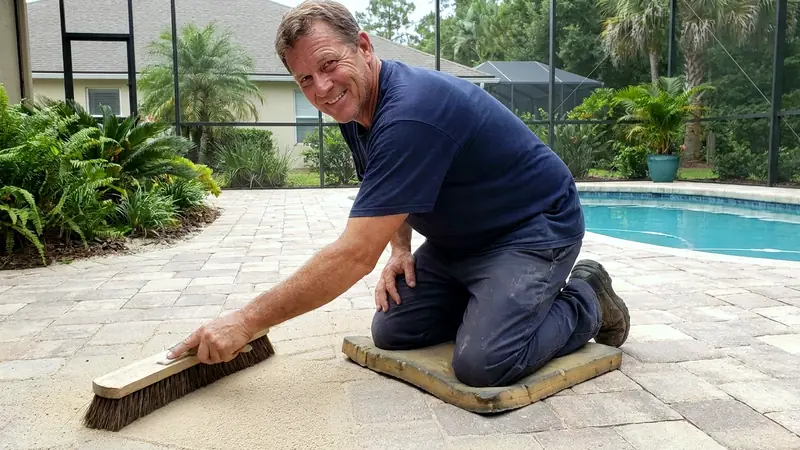
Why local matters in Jacksonville Beach
A contractor who works the beach knows how fast conditions change between the ocean side and the Intracoastal side of the island. Salt, sea breeze and sand get factored in before the quote is written, and so does the weather that week. To reach a contractor who works Jacksonville Beach and the neighboring beach communities, call (904) 719-7441.
Local knowledge also covers the housing stock. San Pablo Terrace has homes from the 1950s through the 2000s, Ocean Terrace has a homeowners association, and the city has a notable collection of mid-century modern homes. A contractor who knows that asks about association rules and finish before choosing a product. Send your street name when you send the short estimate form.
Storm history matters too. Matthew sent water over the dunes in 2016 and Irma followed the next year, so a contractor who works here asks whether your pavers were ever under water. That changes the wash plan. If you are unsure what your yard has been through, call (904) 719-7441.
What is the story behind Jacksonville Beach?
It started as a settlement named Ruby in 1884, became Pablo Beach in 1886 and took the name Jacksonville Beach in 1925. U.S. Route 90 ends at State Road A1A three blocks from the ocean, and the city kept its own government when Duval County consolidated with Jacksonville in 1968. If you live near that stretch and want your pavers sealed, send the short estimate form.
The Mission-style Casa Marina Hotel was completed in 1925 and is on the National Register, as is the 1947 Art Moderne lifeguard station. The Beaches Museum on Beach Boulevard keeps the area's first post office, and the pier reopened July 6, 2022 after a three-year rebuild. Near Latham Plaza, the pier or Hanna Park, call (904) 719-7441 and give your address.
Frequently Asked Questions
Are sealed pavers worth the cost in Jacksonville Beach?
Yes, for most driveways and pool decks here. Sealer holds joint sand in place and keeps salt residue, oil and dirt sitting on top, so they rinse off instead of soaking in. One Jacksonville company says unsealed concrete pavers fade noticeably within 3 to 5 years in this sun. Fading is slow, so many owners only notice it when a repaired patch looks darker than the rest.
How long do paver sealers last in Jacksonville Beach?
Most coats are quoted to last two to five years here. One local company puts film-forming sealers at 3 to 5 years and penetrating ones at 5 to 7. Driveways and pool decks tend to need resealing sooner than shaded patios. A simple test helps: when water stops beading and soaks in, the coat is spent.
How much is sealant for pavers in Jacksonville Beach?
The commonly published price here is $1.75 to $3.25 per square foot to clean, sand and seal. A smaller beach lot can cost more per square foot, because prep does not shrink with the job. Ask for the measured area and sealer name in writing, and compare any bid with that range.
Is it better to spray or roll paver sealer in Jacksonville Beach?
Many contractors do both. They spray the coat and back-roll it, since rolling alone risks lap marks and spraying alone can leave too much on textured pavers. Ask which method the contractor plans to use on your surface, and how the joints will be coated.
Does salt air damage pavers in Jacksonville Beach?
A paver maker says airborne salt crystallizes on surfaces as moisture dries and may wear lower-density materials over time. Pale pavers show salt residue and sand sooner, so a light driveway near the ocean benefits most. A sealed surface rinses clean more easily than a bare one, which keeps residue from building up between coats.
Which sealer finish is best near a Jacksonville Beach pool?
One Jacksonville company says matte or a penetrating sealer is safest near pools. A pool deck needs an anti-slip additive in any finish, because gloss is slippery when wet. Changing finishes later means stripping the old one, so choose with care the first time.
Why does sealer turn white on pavers in Jacksonville Beach?
Nearly always the pavers were damp or the coat went on too thick. Humid beach air makes drying time a real issue. A contractor who waits for a fully dry surface avoids most of it, even if that moves the date by a day or two.
When should I seal pavers in Jacksonville Beach?
Fall is a good window. Hurricane season ends November 30, and November is the driest month at about 2.5 inches of rain. A Jacksonville company says sealing after hurricane season protects pavers through the dry winter.
Ready for a Free Estimate in Jacksonville Beach?
Call (904) 719-7441 and tell us about your pavers.
Free, no obligation